
Capabilities - Fall Detection
Fall Detection uses pose-estimation models to identify the rapid vertical-to-horizontal body transitions characteristic of fall events, distinguishing them from normal activities like sitting down, bending, or lying on a couch. The system is designed to provide alerts within seconds of a fall, addressing the critical response gap in elderly care, assisted living, and industrial safety. Unlike wearable-based solutions, camera-based detection requires no device on the person and works for anyone within the camera field of view — visitors, staff, and residents alike.
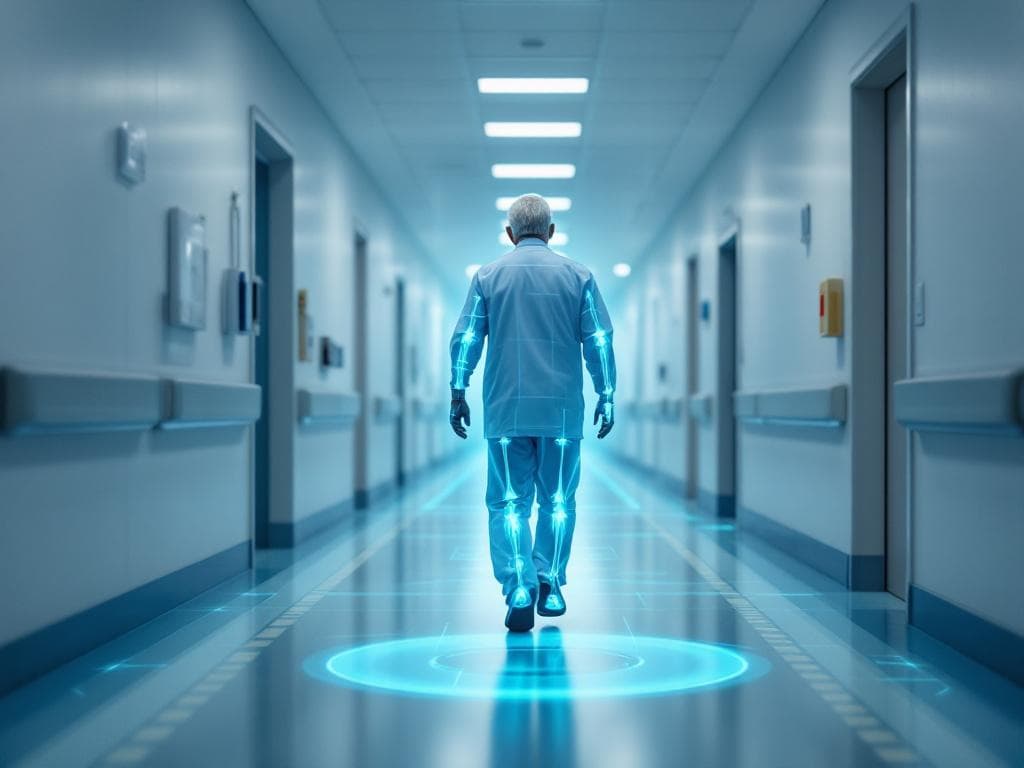
- Alert After Fall
- <5s
- Camera-Only Detection
- No Wearable
- Skeleton Analysis
- Pose-Based
How it works - Fall Detection in three steps
Get started with fall detection in minutes using your existing camera infrastructure.
- Connect Room and Hallway Cameras. Install cameras in common areas, hallways, bathrooms (privacy-mode compatible), and high-risk zones. The system works with existing IP cameras and supports privacy-preserving skeleton-only processing where full video is not appropriate.
- Pose Estimation and Fall Classification. A real-time pose-estimation model tracks body keypoints frame by frame, building a temporal sequence of posture states. A fall classifier analyzes the velocity and trajectory of the transition from upright to ground-level, filtering out normal activities like sitting or crouching.
- Alert Caregivers Instantly. When a fall is confirmed, alerts are dispatched to designated caregivers, nursing stations, or monitoring centers with the camera location, a snapshot or skeleton-only image, and the timestamp. If no response is acknowledged within a configurable window, the alert escalates.
Features
Everything you need for production-grade fall detection.
- Rapid Fall Detection. Identifies fall events within seconds by analyzing the speed and angle of body posture change. The temporal model distinguishes sudden collapses from gradual position changes.
- Activity Discrimination. Differentiates falls from normal activities — sitting down, bending to pick up objects, lying on furniture, exercising on the floor. Reduces false alarms that erode trust in alerting systems.
- Skeleton-Only Privacy Mode. Processes video as anonymous skeletal keypoints only, discarding all pixel data. Alerts include stick-figure visualizations instead of photographs, suitable for bedrooms and bathrooms.
- Post-Fall Immobility Monitoring. After detecting a fall, the system monitors whether the person regains mobility. Extended immobility triggers escalated alerts, as prolonged time on the ground correlates with worse outcomes.
- Multi-Person Tracking. Tracks multiple individuals simultaneously within a single camera view, detecting falls for any person regardless of occlusions from furniture or other people.
- Escalation Chains. Configurable alert routing sends initial notifications to nearby staff, then escalates to supervisors and emergency contacts if the alert is not acknowledged within defined time windows.
- Historical Fall Analytics. Logs all detected falls with location, time, and context. Facility managers can identify high-risk areas, peak fall times, and recurring patterns to guide preventive interventions.
Use cases
Real-world applications of fall detection across industries.
Assisted Living Facilities
Falls are the leading cause of injury in assisted living environments, and residents may be alone when they occur. Camera-based detection can provide immediate notification to on-duty staff, reducing the critical time between a fall and first response.
- Healthcare
- Senior Living
Hospital Patient Monitoring
Hospitalized patients — especially those recovering from surgery or on sedating medications — are at elevated fall risk. Room-mounted cameras in skeleton-only mode can alert nursing staff without compromising patient privacy.
- Healthcare
Home Care for Aging in Place
Older adults living independently face fall risk without on-site staff. A camera system in key rooms can alert family members or remote monitoring services, enabling aging in place with an additional safety layer.
- Healthcare
- Senior Living
Industrial Workplace Safety
Workers on elevated platforms, ladders, and scaffolding face fall hazards. Camera-based detection can provide an alert independent of whether the worker is wearing a personal fall-arrest system, covering visitors and contractors as well.
- Manufacturing
- Construction
- Energy
Retail Slip-and-Fall Monitoring
Retail stores face liability from customer falls on wet floors or cluttered aisles. Immediate detection enables rapid staff response and generates timestamped incident documentation for risk management.
- Retail
- Hospitality
Public Transit Station Safety
Falls on escalators, platforms, and stairways at transit stations require rapid response. Automated detection can alert station personnel immediately, supplementing the coverage that human monitoring of dozens of camera feeds cannot maintain.
- Transportation
- Smart City
See how fall detection works in your environment
Schedule a free discovery call. We will walk through your cameras, your use case, and what our detection models can do for you.
Technical specifications
- Models
- YOLOv8-Pose with temporal LSTM fall classifier; trained on synthetic and real fall datasets
- Accuracy
- Pose-based fall classification with activity discrimination; tunable sensitivity thresholds
- Latency
- <80ms per frame for pose estimation; fall confirmation within 2-5 seconds of event onset
- Input Formats
- RTSP, ONVIF, MP4, HLS, MJPEG
- Output Formats
- JSON, MQTT, Webhooks, HL7 FHIR (healthcare integration), CSV
- Edge Support
- NVIDIA Jetson (Orin/Xavier), Intel NUC, any x86 with CUDA-capable GPU
Related capabilities
Ready to explore what AI vision can do for you?
Contact us
- Headquarters
ConductScience Inc.
5250 Old Orchard Rd Suite 300
Skokie, IL 60077
+1 (847) 983-3672 - Sales & Support
info@conductscience.com
Mon – Fri, 9 AM – 5 PM EST